Merge Miners
- 4.5
- Rating
- 10.00M
- Installs
- Free
- Price
 Analysis by App-foxy
I first approached Merge Miners expecting a quick puzzle game built around digging, and that is exactly where its appeal begins. It is a free game from Supersonic Studios LTD, aimed at Everyone, with a simple idea that is easy to understand before the first session is over: combine miners, keep the digging going, and use the resulting progress to make the next run feel more productive.
What surprised me was how much of the experience depends on presentation rather than complicated rules. The game does not need a large story or a dense tutorial to establish its mood. Its setting, visual feedback, and steady rhythm all point toward the same kind of play: short, uncomplicated sessions where I can focus on making the next useful merge instead of learning a large system.
That makes it a natural choice when I want something lighter than a traditional logic puzzle. The store summary asks whether I am bored and invites me to dig, while the short description presents it as a miner-merging game. In practice, I found that the strongest reason to try it is not the novelty of either word alone, but the way the two activities are connected into a compact loop.
You May Also Like

 Blood Strike: 2.5 Anniversary
Blood Strike’s Loadouts Turn Every Drop Into a Tactical Gamble
A close look at Blood Strike’s custom loadouts: how fast access to signature weapons reshapes its battle royale rhythm, rewards preparation, and narrows the gap between fights.

 Pandora - Music & Podcasts
Pandora’s Music Is Easy to Start, but Harder to Recover
Pandora’s strength is its low-effort path from a seed to a station. Its weak spot is how much confidence it asks you to place in connection, setup, and quiet recovery.

 8 Ball Pool
 Is Built on Rivalries, Rematches, and Routine
A close look at the rivalries, rematches, shared routines, and unanswered safety questions that turn a quick pool match into a persistent mobile community.

 Samsung Music
’s Quiet Strength Is Playing What You Already Own
Its reach comes less from spectacle than from dependable access to a personal library. That simplicity is both the app’s strongest retention engine and its ceiling.

 AccuWeather: Weather Radar
AccuWeather Review: A Quick, Clear Forecast for Everyday Decisions
For everyday plans, the best forecast is the one you can understand quickly. AccuWeather makes rain timing, radar, and local conditions easy to act on, with a few trade-offs.

 Hill Climb Racing
Why Hill Climb Racing Still Turns Crashes Into One More Run
A tiny car, a bumpy hill and one more upgrade: Hill Climb Racing keeps resurfacing because its simple chaos makes every near-miss feel personal.
More From Our News Desk



A small mining world with a clear visual language
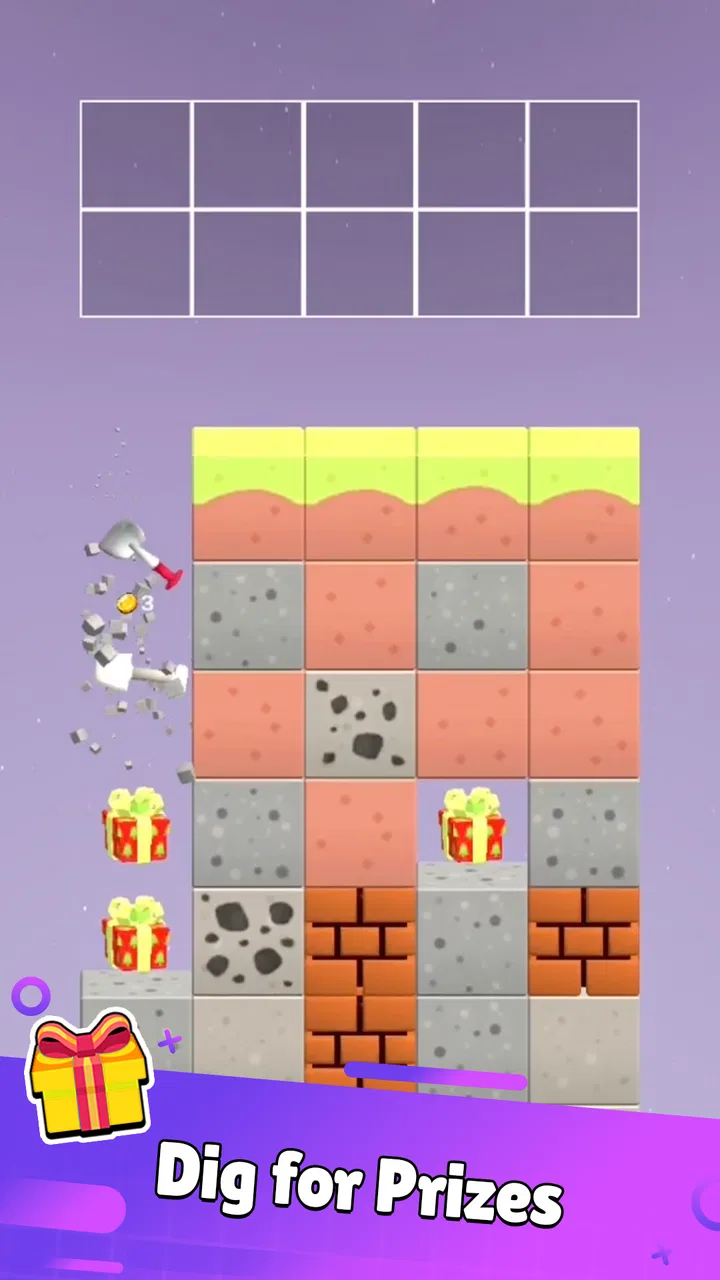
The art direction works because it keeps the subject immediately readable. Miners, digging, and forward movement are not buried under a complicated interface. I can understand what matters by looking at the play area: which pieces can be combined, where progress is happening, and what deserves attention next.
This clarity is especially valuable in a puzzle game designed for casual use. When I open it during a spare moment, I do not want to decode a crowded screen before making my first decision. The visual language gives the game a playful, approachable identity, and it supports the main action instead of competing with it.
The mining setting also gives the merge mechanic a stronger sense of purpose than a purely abstract matching board would have. Combining units is not just an isolated number exercise. It feels connected to the idea of building a more capable digging force, which helps the repeated actions retain a little context even when a session becomes familiar.
I would not play this expecting a deep adventure world. Its setting is functional rather than narrative-heavy, and that is an important distinction. There is enough visual direction to make the activity coherent, but not so much story that the game becomes a substitute for a role-playing game or a management simulation. For me, that balance is effective during short visits.
Why the presentation helps the puzzle loop
The strongest visual choice is restraint. A merge game can easily become difficult to read when several upgrade stages, counters, and rewards are competing for attention. Here, the mining theme gives those changes a recognizable frame. A stronger result feels like a better tool for the next stretch of digging, not merely another icon appearing on a board.
That also makes the game easier to recommend to players who normally avoid puzzle apps with a sterile or overly abstract look. Someone who enjoys the satisfaction of building a small workforce may find the theme more inviting than a standard tile-merging layout. On the other hand, players who need a rich world, character development, or exploration may find the setting too thin.
One useful habit is to pause briefly after a major merge rather than tapping immediately through every available action. The visual changes can help me recognize which unit is now most valuable and prevent the session from turning into automatic tapping. This is a small adjustment, but it makes the puzzle side feel more deliberate.
Sound, feedback, and the rhythm of digging
The mood of Merge Miners comes less from dramatic storytelling and more from repetition. Digging creates a natural pulse: prepare, combine, move forward, and repeat. That rhythm is comfortable when I want a game that occupies my hands without demanding constant concentration.
In my experience, the pacing is at its best when I treat each session as a sequence of small decisions rather than one long challenge. I can look at the available miners, decide whether an immediate merge is useful, and then watch the result feed into the next section of play. The game’s audiovisual feedback supports that pattern by making progress feel continuous instead of disconnected.
This is also where the game’s limitations become visible. A loop based on repeated digging and merging can lose impact if I play for too long without a break. The same qualities that make it calming in a short session can make it feel repetitive during an extended one. I would not choose it for a long evening of intense puzzle solving; I would choose it for several brief returns throughout the day.
For a realistic everyday example, I can imagine opening it while waiting for a train, taking a few minutes to merge and advance, then closing it without needing to remember a complicated quest or story conversation. It also fits a short break between tasks because the central objective is obvious when I return. That convenience is one of its practical strengths.
How to use the rhythm without losing the strategy
I get more from the pacing when I avoid treating every available merge as automatically correct. The quick option is often satisfying, but a moment of attention helps me decide whether combining now improves the current digging flow or merely clears space. This is the first non-obvious trade-off I noticed: speed makes the game relaxing, while a little restraint makes it feel more like a puzzle.
Another useful approach is to play in defined bursts. I might finish a small stretch of progress, stop before the actions become routine, and return later. That keeps the digging mood pleasant and reduces the chance that repetition will overshadow the charm of the setting. The game is better as a dependable pocket activity than as a marathon challenge.
The sound and visual feedback also make it easier to play without constantly reading text, although I still prefer paying attention when making a merge. If I am distracted, the game remains accessible, but I am more likely to make choices based on immediacy rather than on the best next step. That distinction matters for anyone hoping to approach it as a puzzle rather than as a simple idle distraction.
Where the merge mechanic fits—and where it does not
The core design is easy to grasp: miners are combined to create stronger results, and those results support further digging. That connection gives the game a satisfying chain of cause and effect. I make a merge, see a more capable unit, and understand why that change matters to the next part of the session.
Compared with a conventional match-three game, Merge Miners feels less focused on arranging colors or clearing a fixed board under pressure. Compared with a deeper resource-management game, it asks for far less planning and offers a much gentler learning curve. Its position between those familiar alternatives is important: it is a casual progression puzzle with a mining skin, not a demanding tactical simulator.
That makes it particularly suitable for players who like visible improvement but do not want a large inventory, a complicated economy, or a long chain of missions to maintain. I can understand the immediate objective and still have a reason to care about the next upgrade. The game’s satisfaction comes from accumulation and momentum rather than from discovering a difficult solution.
There is a trade-off, though. Players who enjoy puzzles with many possible solutions may find the decision-making narrower than expected. The merge action is pleasant, but the surrounding structure does not turn every move into a profound calculation. I would recommend a more intricate logic game to someone who wants strict deduction, layered board states, or a challenge that keeps escalating through complex rules.
Practical choices during a session
The best way I found to approach the game is to separate progress from impulse. First, I look at what can be combined. Then I consider whether the resulting miner will immediately help the digging flow or whether holding back would leave a more useful arrangement. This simple two-step check is more rewarding than tapping every highlighted option as soon as it appears.
It is also worth remembering that the game is free to download but includes in-app purchases priced from $0.99 to $9.99 per item. I would start without spending anything and decide whether the basic loop holds my attention before considering an optional purchase. For a casual puzzle game, that is the sensible order: test the pacing, the repetition, and the value of continued progress first.
The current version is 2.5.10, and the game supports devices running Android 7.0 or later. That makes it accessible to people using older Android hardware, although the exact feel will still depend on the device. If I were installing it on a phone with limited space or an older battery, I would judge it by actual responsiveness and battery behavior rather than assuming every device will offer the same experience.
Because the age rating is Everyone, it is also easy to consider for a broad household audience. I would still explain the purchase model to a younger player and use the device’s normal purchase safeguards. The accessible presentation is a plus, but a simple game can still encourage repeated sessions, so setting a time boundary is useful for children and adults alike.
Who will enjoy the design most
I think the game suits three kinds of players especially well. The first is anyone who likes merge mechanics but wants a clear theme. The second is someone looking for a low-pressure puzzle during commutes, waiting rooms, or short breaks. The third is a player who enjoys watching a modest starting group become more effective through repeated combinations.
I would be more cautious recommending it to people who need constant novelty. If a game must introduce new rules every few minutes, offer a strong narrative, or provide highly competitive scoring, this may feel too modest. The same applies to players who dislike free games with optional purchases, even when they can begin without paying.
For me, the most appealing use case is the in-between moment: I have enough time for a few decisions but not enough attention for a long campaign. The compact mining loop gives that time a shape. I can make progress, stop naturally, and return later without feeling that I have abandoned a complicated system.
How art, sound, and mechanics hold together
The game’s biggest success is coherence. The visuals point toward mining, the action reinforces digging, and the merge system gives the player a reason to keep improving the workers. None of these elements tries to become a separate experience. That unity is why the game feels more polished in use than its very simple premise might suggest.
The atmosphere is not dramatic or mysterious. It is upbeat, repetitive, and deliberately uncomplicated. I see that as a strength when I want a small mental reset, but it also defines the limits of the experience. There is no reason to expect emotional storytelling or a large sense of discovery from a game whose pleasure comes from keeping a straightforward process moving.
One of the more useful insights is that the setting changes how repetition feels. In a bare merge board, repeated combinations can quickly seem like housekeeping. Here, the digging context makes the same kind of action feel like preparation for a physical task. That does not remove repetition, but it gives the repetition a direction, which is enough to keep short sessions engaging.
A second insight is that pacing affects perceived strategy. If I tap quickly, the game becomes almost meditative and the merge choices blur together. If I slow down just enough to compare the immediate benefit of each option, the same mechanics reveal a little more decision-making. The game does not transform into a complex strategy title, but it rewards attention more than its casual appearance initially suggests.
A third insight concerns expectations. The strongest comparison is not with a full puzzle campaign but with other lightweight mobile activities that fill a few minutes. Against that group, the clear theme and visible progression are meaningful advantages. Against a dedicated logic game, however, its simplicity becomes the main weakness. Choosing it depends on whether I want momentum or mental resistance.
What I would change in my own play style
I would avoid opening it with the expectation that every session must produce a major breakthrough. The game works better when I value the small chain of actions: one useful merge, one stretch of digging, and one clear improvement. That mindset keeps the experience from feeling underwhelming when the progress is incremental.
I would also keep an eye on how long I have been playing. The game’s accessible rhythm makes it easy to continue beyond the point where the decisions feel fresh. Stopping after a natural piece of progress preserves the pleasant mood and gives the next session a better chance of feeling inviting rather than repetitive.
Finally, I would judge optional spending by whether it changes my enjoyment of the basic loop, not by whether it accelerates progress. If I already enjoy the free experience, a purchase may feel like a convenience. If the core loop already feels repetitive, paying to move through it faster is unlikely to solve the underlying issue.
My atmosphere verdict after living with the loop
Merge Miners is a focused casual puzzle game that understands the value of a clear mood. Its mining setting, readable visual language, and steady audiovisual rhythm make the merge mechanic easy to enter and pleasant to revisit. I can see why it has reached over 10 million installs and earned a 4.5 average from around 348 thousand ratings: the concept is approachable, the theme is immediately understandable, and the game fits naturally into spare moments.
The developer, Supersonic Studios LTD, keeps the experience centered on its main activity rather than surrounding it with unnecessary complexity. That focus is welcome, although it means the game has a definite ceiling. I would not choose it when I want a rich story, demanding logic, or a long-form strategic challenge. I would choose it when I want a small, themed progression loop that can begin quickly and end without ceremony.
My final recommendation is therefore specific. Try it if you enjoy merging, visible upgrades, and a playful digging atmosphere, especially when your gaming time arrives in short pieces. Approach it more cautiously if repetition bothers you or if optional purchases are a deal-breaker. In my experience, its best quality is the way art direction, sound, and mechanics create one consistent feeling: a simple mining routine that is easy to start, satisfying to steer, and most enjoyable when played in measured bursts.
FAQs for Merge Miners
01What is the primary objective of Merge Miners?
Merge Miners is a casual puzzle game where your main objective is to combine identical miners to create more powerful ones. As you progress, you unlock new levels, and the difficulty increases. The goal is to manage your resources efficiently to maximize your mining output and advance through the game.
02Is Merge Miners free to play, and are there in-app purchases?
Merge Miners is free to download and play, but it does offer in-app purchases. These can be used to enhance gameplay by purchasing extra coins, boosters, or special items. While in-app purchases can accelerate progress, they are not necessary to enjoy the full game experience.
03Does Merge Miners require an internet connection to play?
Merge Miners can be played both online and offline. However, certain features, such as leaderboards and daily rewards, may require an internet connection. Playing offline allows you to enjoy the core gameplay but limits some of the social and bonus features.
04What age group is Merge Miners appropriate for?
Merge Miners is suitable for players aged 4 and up. Its simple mechanics and colorful graphics appeal to children, while the strategic elements offer a challenge for older players. Parents can rest assured that the game contains no inappropriate content.
05How can I save my progress in Merge Miners?
Progress in Merge Miners is typically saved automatically. For added security, you can connect the game to your Google Play or Apple Game Center account. This allows you to save your progress to the cloud and continue on different devices without losing your achievements.
Pros
- Engaging gameplay with strategic depth.
- Visually appealing graphics and animations.
- Regular updates with new content.
- Simple controls
- easy to learn.
- Offline mode available for play anywhere.
Cons
- Can become repetitive over time.
- Some features hidden behind paywalls.
- Ads can be intrusive for free users.
- Requires significant storage space.
- Battery drain on lower-end devices.

Merge Miners
Gallery